
The Problem

With Early Access around the corner, The Box is Alive's Steam page needed a little TLC. I set out to refresh the copy and lean further into the game's pun-filled personality, but saw an opportunity to improve the storefront as a whole.
After snooping through top-performing Steam pages (and a few Reddit rabbit holes), I uncovered patterns that make storefronts stand out—from punchy short descriptions to stronger screenshots.
The team was all in, giving me the green light to optimize the game’s Steam page. So long as I didn’t forget to add the puns.
As if I’d ever forget about the puns.
Step 1: Research & Revisions
(First Draft)
(First Draft)
Better Together: Copy & Visuals
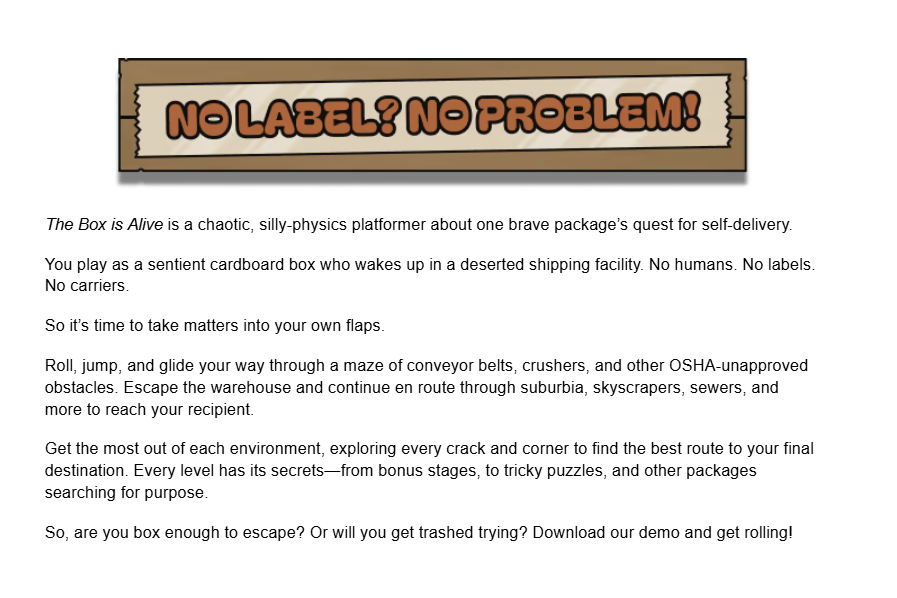
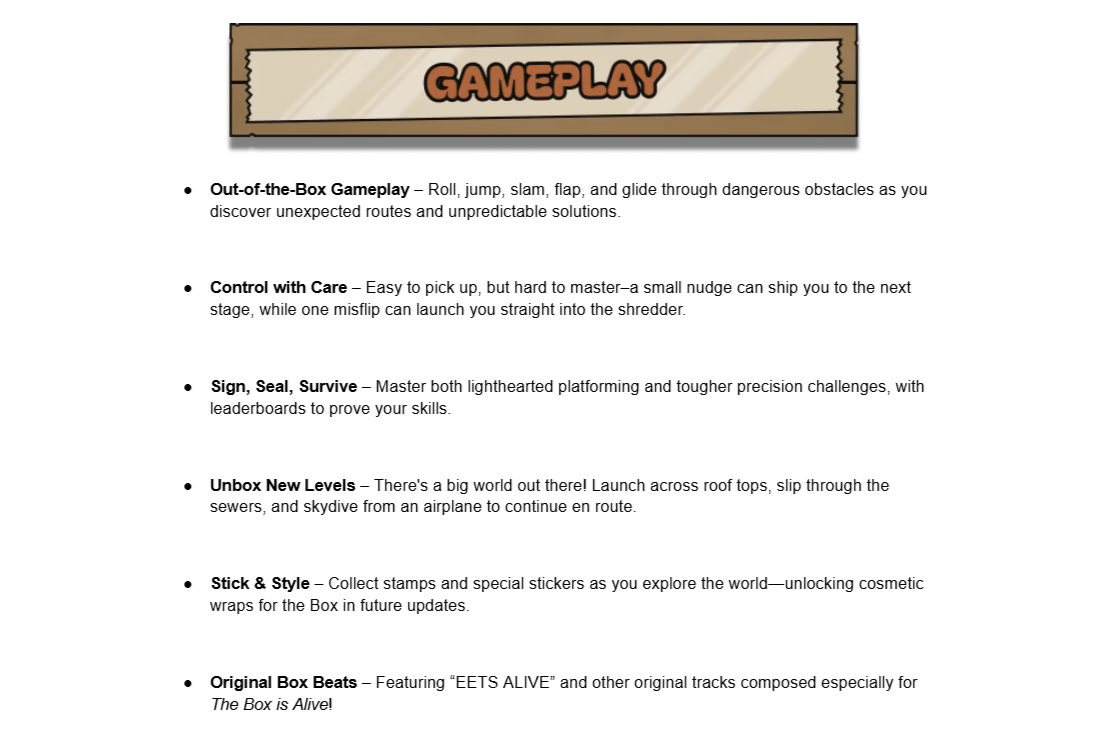
My first draft solely focused on the copy, assuming Steam's built-in gallery would be enough to carry the visual storytelling. Instead, the page ended up as two dense blocks of texts. All the details were there, they just weren't engaging.
After analyzing a variety of Steam store pages, I realized the strongest examples didn't really on copy or visuals alone, but used one to reinforce the other.
Step 2: Reformatting Steam Copy
Hooking Players From the Get-Go
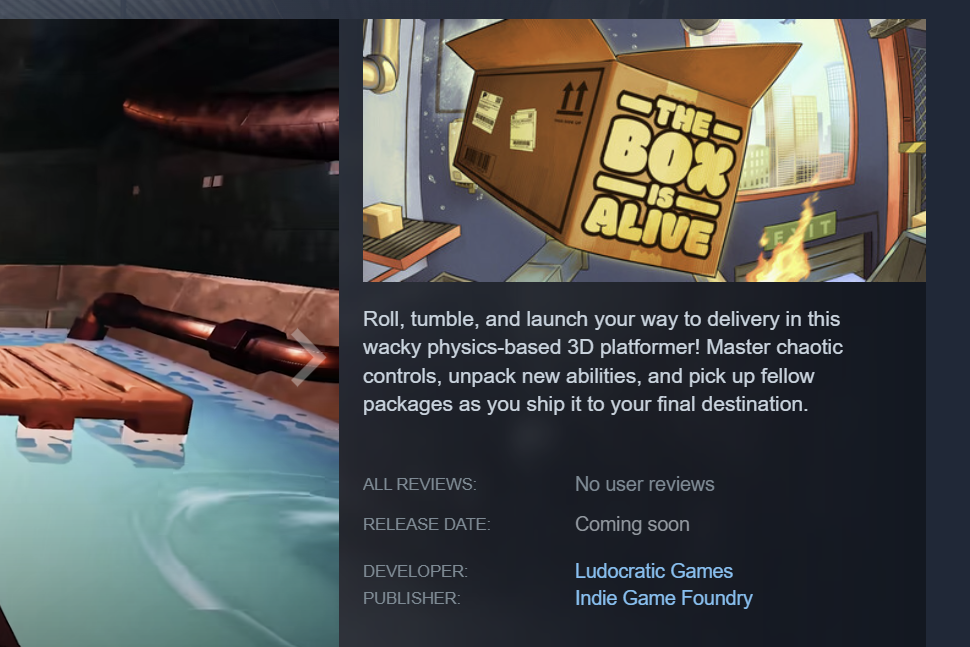
I started by rewriting the short description—the first copy many players encounter through Steam recommendations. I led with strong action verbs before introducing the game's tone and genre, creating a more compelling hook for the target audience.
I then went back and restructured the page around the game's core hooks and features, giving each it's own concise, scannable section (~50 words). Here, as promised, is where I weaved in plenty of mail puns and let the game's playful personality shine.
Step 3: Visual Asset Creation
Pics or It Didn’t Happen
The first four screenshots of a Steam page are critical to making a strong first impression on potential players.
The Box is Alive opened with four nearly identical static shots. They were high-quality, but did little to showcase the game’s features.
Using existing footage, I captured new screenshots highlighting movement, unlockable content, and varied environments, creating a gallery that better sold the game's wacky personality and core mechanics.
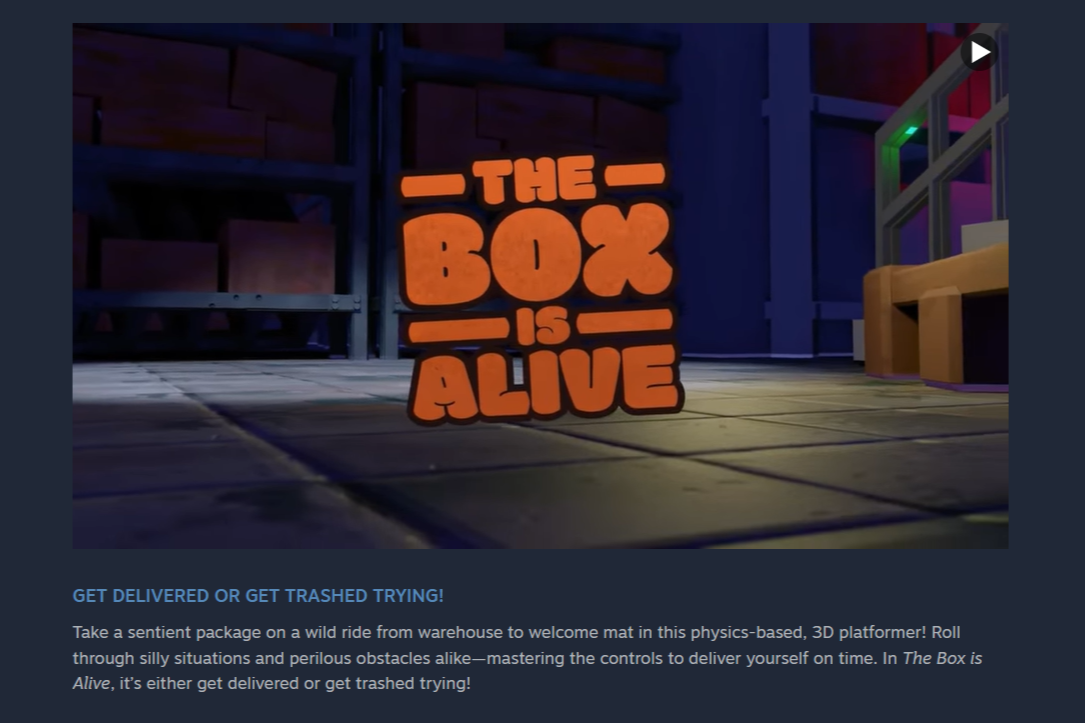
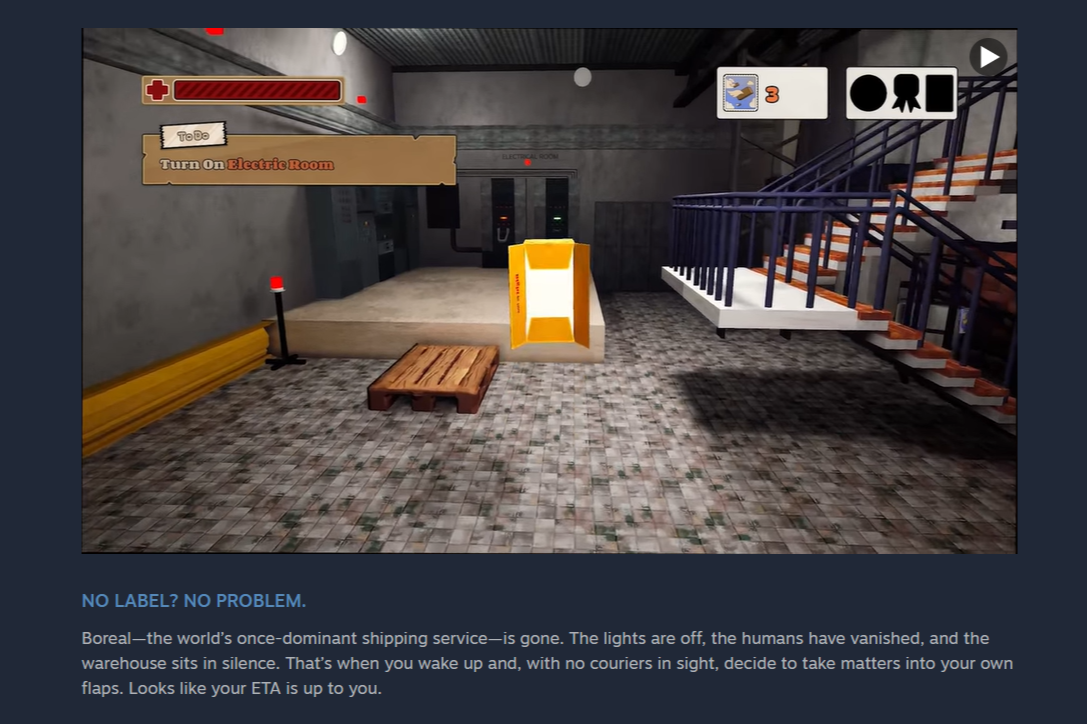
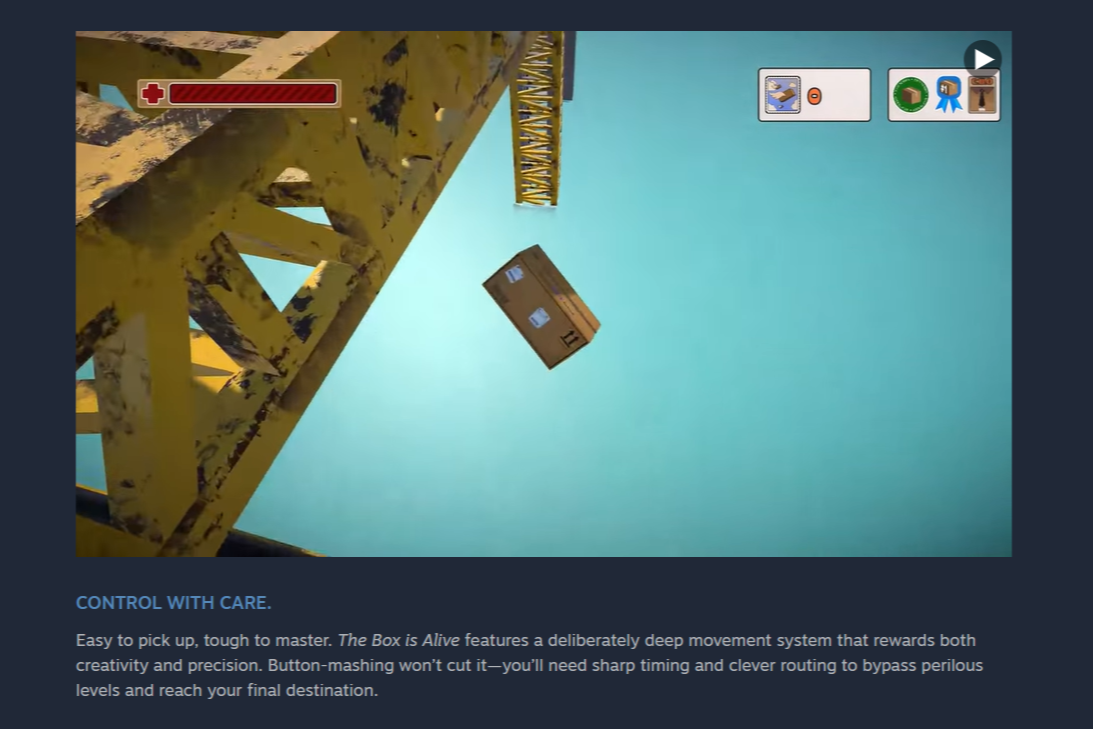
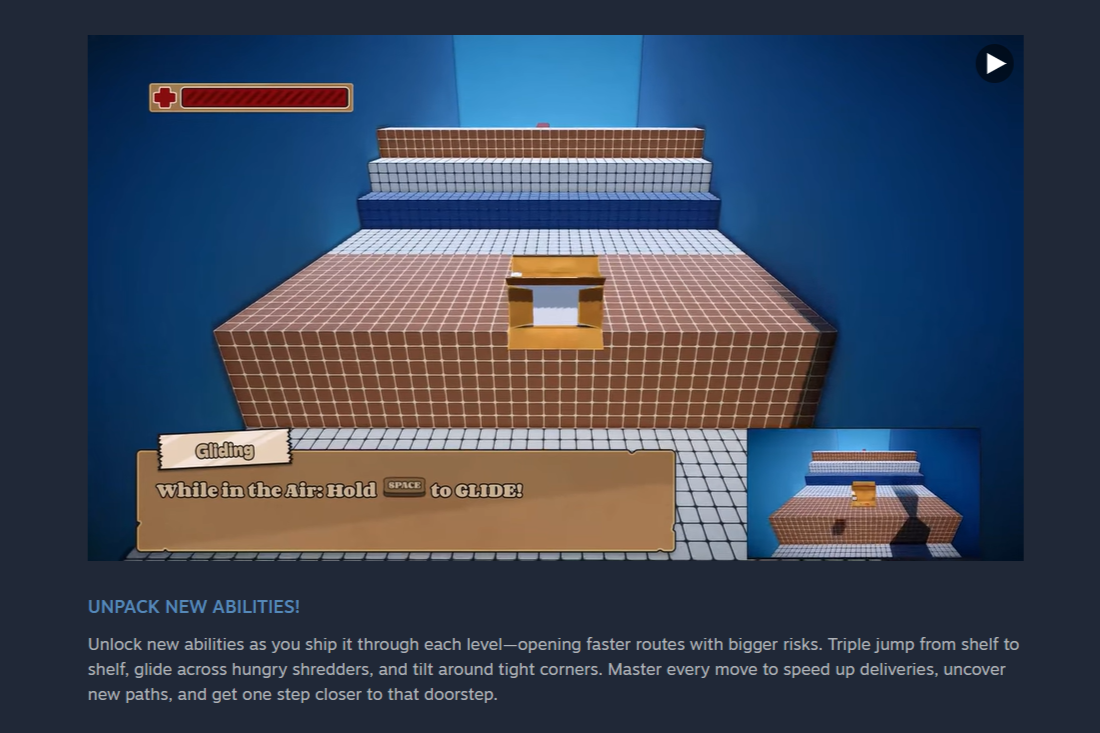
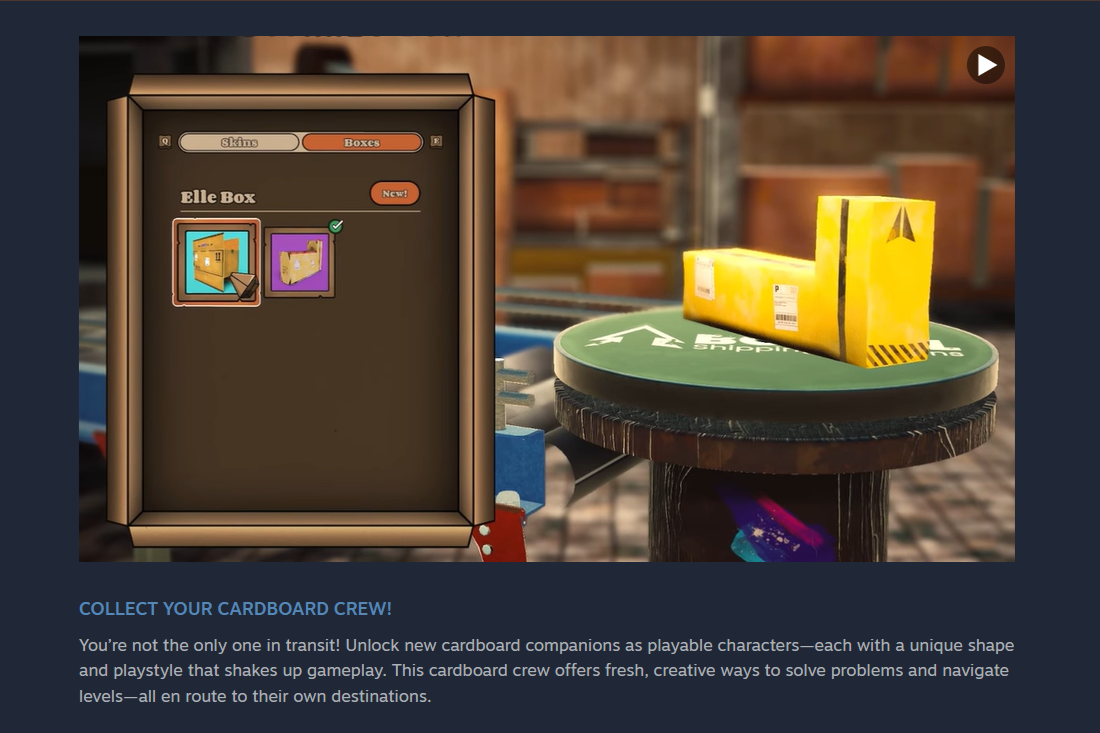
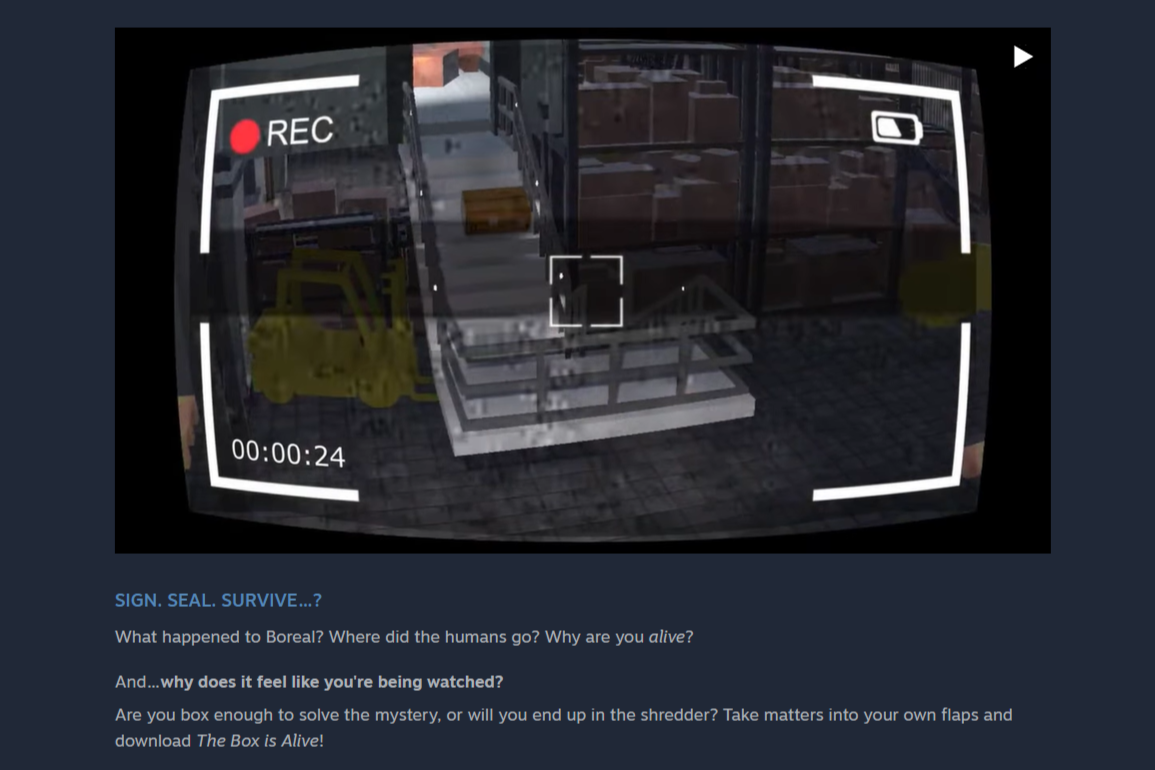
Finally, I reinforced the copy with gameplay visuals. Pulling from the same footage, I selected clips that directly supported each feature covered in the Steam description.
I opted for MP4s instead of static images to better showcase the game's movement, editing the clips in CapCut before integrating them throughout the page. This better segmented the copy, improved readability, and reinforced the features described in each section—adding credibility to The Box is Alive's store page.
The Result
The Box is Alive's Steam page started as two walls of text with a gallery of static screenshots—failing to show what made the game special.
By researching Steam best practices, I restructured the page so that both the copywriting and visual assets worked in tandem to tell the Box’s story.
The result is a storefront that highlights the game's challenging gameplay, mysterious backstory, and quirky sense of humor—giving potential players a compelling overview and transforming the page from barebones to wishlist-worthy.